
“The phone in your pocket is a time machine. Take it out, point the camera, and shoot important moments in your life. It’s your very own film,” says Victoria Mapplebeck, a Department of Media Arts professor at the Royal Holloway University of London. She knows a thing (or two) about making films with a smartphone.
Victoria won the BAFTA honors in the Short Form Programme category in 2019 for her film Missed Call. It was shot on an iPhone X, one of the first films to showcase the might of smartphone filmmaking.
For a person who obsesses over megapixel counts and computational wizardry, I was curious to know about the devices she preferred, hoping to hear about some Ultra Android or a Pro Max-tier Apple device. The answer surprised me. Victoria shot her award-winning short film 160 Characters on an iPhone launched around a decade ago.
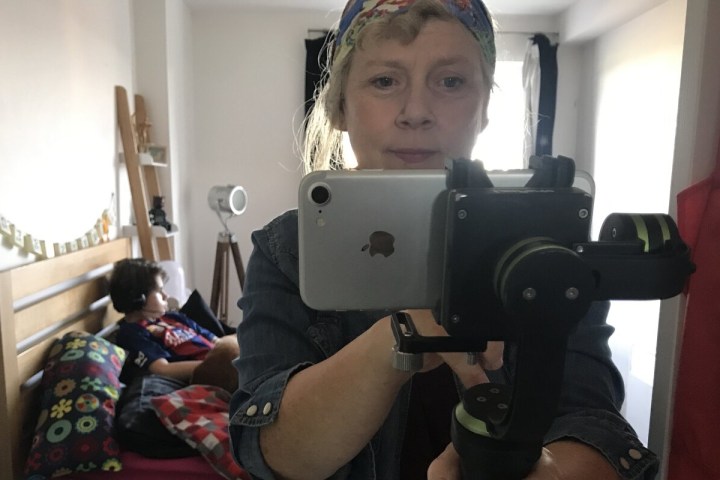
That was an era when computational magic was far from taking shape on smartphones. There weren’t many editing apps with all the bells and whistles one would expect from the current crop of tools that can generate a fancy Instagram Reel with snazzy effects within a few minutes right on the phone.
Over the years, she has been loyal to iPhones, with her latest one being the iPhone 13. Not the Pro variant with an extra zoom camera or the two generations that came after it. Victoria’s revelations bring Apple into the picture and in a myth-bursting fashion.
Apple is a seller. You don’t have to buy
Earlier this month, the Apple Holiday Film was released on YouTube. An amalgam of the slice-of-life genre and stop-motion holiday-themed visuals, Apple once again made it clear that it knows how to catch your feelings with tastefully done videos. “Stop-motion was shot on iPhone 15 Pro Max and edited on MacBook Air,” says the description.
And just to ensure that the viewer doesn’t miss the ad placement, the video shows the lead doing the stop motion capture in an apartment room on an iPhone 15 Pro and editing it on a MacBook Pro.
That’s the kind of creative bandwidth you get if you can afford a thousand-dollar iPhone and a slightly more expensive Mac — plus a little more on recording gear. Whether you learn film-making and editing at a college or from an online course isn’t Apple’s concern.
Apple made that abundantly clear when it shot an entire event on an iPhone for grandiose bragging rights but didn’t say a word about the fat wads of cash it burned it spent on a world-class crew, cutting-edge shooting rig, and a painstakingly refined editing pipeline.
You don’t need an iPhone, or the latest one
Filmmakers like Victoria are apparently not as concerned with all that gear and a vast crew that Apple pays for. “When someone comes to me and asks if they can shoot a film on my phone, I tell them, ‘Are you kidding me? Of course, you can,’” says Susy Botello, who has been experimenting with shot-on-phone films ever since brands started getting serious about cameras.
Botello started the world’s first film festival exclusively for content shot on a phone back in 2009. The International Mobil Film Festival is approaching its 13th edition, which kicks off on April 26 in San Diego, California. She is also a self-professed tech nerd and even asked me to be her confidant to keep her informed about all the latest developments.
But is it realistically possible to shoot any kind of film, short or otherwise, on a phone? “A lot of people have made their films for free. It did not cost them anything,” Susy tells me. Victoria also notes that she owns a DJI Osmo, but she rarely uses it, as the stabilization feature in the Filmic app is good enough to shoot with a phone in your hands.
“Don’t get too hung up thinking you don’t have the latest phone. New phones are cost-prohibitive. Get a used or refurbished unit. It will do the job,” advises Victoria. She adds that her first film was shot on a two thousand pound budget. Susy has a more dramatic solution to the conundrum.
“You’re going to a grocery store. You don’t need a Lamborghini for that.”
Both filmmakers acknowledge that iPhones are the preferred choice among the filmmakers. It certainly helps that Apple’s dominance with silicon tech — and a pedigree of reliable cameras — makes iPhones the preferred choice for even developers of apps like Filmic Pro.

It was the app of choice for ground-breaking mobile-shot films like the multi-award-winning Tangerine by Sean Baker. Even heavyweights like Steven Soderbergh and Zack Snyder used the same app. For its event, Apple preferred the Blackmagic Camera app. The best part about it is that the app is free.
It, therefore, doesn’t come as a surprise that Apple is the preferred choice for mobile filmmakers. But when it comes to Android phones, there is no need to put your ambitions on hold just because you can’t afford an iPhone.
They are good enough. “I am constantly telling people that it’s about the phone. It has to be all phones,” says Susy. Thankfully, the situation is improving, and you don’t have to feel any ‘less professional’ if you are thinking about submitting an Android-captured film at a film festival.”
“At our film festival, we see creatives with Samsung, Pixel, and Sony phones. One winner shot a film using a phone that’s not even available in the U.S.,” says Susy. The first prize winner at the film festival’s recent edition was shot on a Xiaomi smartphone, a brand that is not available in the United States.
Is it a one-man job?

Shooting is just one-half of the filmmaking equation. Getting a proper edit turns a crude recording into a film. Post-processing is what takes the most time, as well as the funding. But that’s not an insurmountable challenge. The biggest hurdle is getting started.
“The whole point is to tell a story. In order to do that, watch films and then try to replicate it. Everybody watches films. You don’t need to obsess over frame rates,” Susy says. She cites the example of Konrad Mess, who wrote, directed, and shot his short film Vengeance on an iPhone 4s.
Victoria is currently working on a film called Motherboard. It’s a feature documentary that details the journey of raising her son as a single mother, winning the battle against breast cancer, braving the pandemic in a small flat, and documenting the joys and challenges of motherhood over the course of more than 18 years.
Don’t look at the wrapper. Eat the candy.
The film has been shot predominantly on a smartphone and includes footage recorded on oldies such as the iPhone 5, 6, 7, and X, while Filmic Pro serves as the software foundation. But smartphones played a crucial role here, something a DSLR or a bulky film camera wouldn’t have allowed.
“I was able to record my journey, like the time spent in hospitals for scans and treatments, because a phone isn’t as intrusive as a film camera. Sometimes, even the staff helped me,” Victoria recalls. One can argue that it only applies to a film documenting your own journey from a first-person perspective.
But that couldn’t be further from the truth. Susy tells the example of Charon, a short horror film by Jennifer Zhang that won multiple awards, made it to Cannes, and was shot entirely on an iPhone 8 during the pandemic phase.
“Jennifer put the phone on a tripod and did the acting on her own in front of the camera. She put the whole film together on a social media editing app,” Susy tells me. Zhang detailed her journey of making Charon in an episode of Susy’s SBP Podcast here.
Zhang would act out film sequences and then edit the footage right after it, handling post-production in real time. Of course, editing takes skills — or money if you’re hiring someone. Victoria admits the bulk of the budget and funding was spent on editing in her case.
“If you are telling your friend to do that for you, at least buy them a pizza for it,” Susy suggests on a humorous note. But it’s not impossible.
All you need is already here

I recently tested the Cinematic mode on an iPhone 14 Pro, with Dolby Vision HDR at 4K resolution, for the best results. It tracks the subject and keeps the focus locked on them while applying a film-like bokeh effect to the background.
While the results are good, the best part is that you can edit the footage, change the focus, and do much more on the phone. It almost seems magical that such a demanding post-processing task is even possible on a phone.
But on-phone editing is not everyone’s cup of tea. Both the filmmakers tell me that they edit it on desktop software like DaVinci Resolve or one of Adobe’s software. The decision has to do with controls to achieve a desired visual feel.
“I hate editing on a phone. The compact UI means you don’t get many features. And the touch interface is limiting,” Susy adds. My own experience with DaVinci Resolve on the iPad Pro hasn’t been too different.
What if I have no idea about film-making? Victoria suggests that you just watch the great work out there available for free. “Just turn your phone sideways. And don’t buy all those film-making courses social media creators sell,” Victoria adds. The conclusion here is pretty straightforward.
“Get that camera out and start shooting.”