
The rail sector pioneered technological change in global logistics, yet recent freight‑rail innovation has largely meant merely extending train lengths.
Consequently, many carriers have dropped short‑haul services, surrendering part of the $1 trillion surface‑freight pie to truckers. With diesel costs soaring, numerous trucking firms have collapsed—over a dozen bankruptcies in just weeks—creating a market gap.
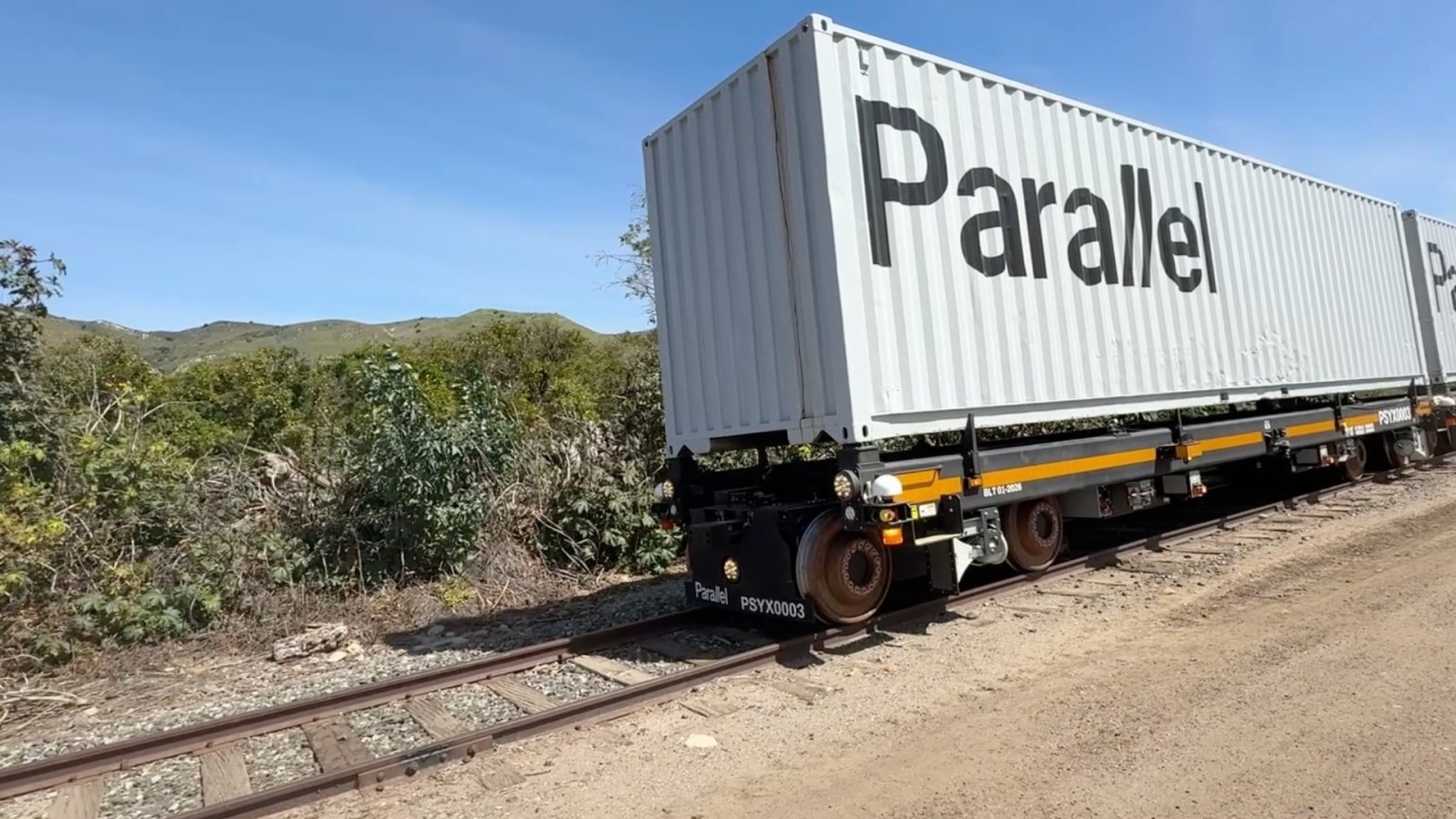
Parallel Systems could offer a solution that keeps goods moving while helping railroads win back share. The startup built a rail vehicle able to haul several tons of freight up to 500 miles autonomously. Scaling production of its Panther units could restore profitability for short‑distance rail shipments.
“Less than 500 miles is hard for railroads to do competitively,” Matt Soule, co‑founder and CEO of Parallel Systems, told Techdaily. “Our technology allows them to take some of that trucking, and it’s for the public’s benefit.”
Operating on existing rail lines, the vehicle avoids adding to road congestion and, being battery‑driven, produces no emissions. To ramp up production of its third‑generation model and accelerate commercial deployment, Parallel Systems closed a $100 million Series C round led by AVP, joined by Hillspire, Agility Global, Cobalt Capital, Anthos Capital, Congruent Ventures, Riot Ventures, and Collaborative Fund.
Soule and his fellow founders launched Parallel Systems in 2020 following stints at SpaceX, where they worked on rocket avionics.
The firm’s units can run solo or in platoons that are generally shorter than conventional trains—a tactic that counters the industry‑wide precision‑railroading model, under which mature railroads, pressured by investors, lengthen trains and fix schedules to distribute labor costs over larger cargo volumes.
As carriers retreat from short‑haul corridors, truckers fill the void. Currently, about 60 % of U.S. freight movements are under 500 miles, with trucking firms handling most of that segment.
Increased truck traffic worsens congestion, especially evident at seaports. As Soule remarked, “If you ever go to the Port of Savannah, you see the truck lines coming in and out of the port — it’s insanity.”
Unlike conventional railcars, Parallel’s units lack couplers and instead form uncoupled platoons that travel along the tracks. This coupler‑free setup lets the vehicles separate automatically upon reaching a yard, without crew assistance. Once a Panther is authorized for a track segment, its sensors continuously scan ahead to confirm the path is obstacle‑free.
Trucking firms have shown interest in Parallel, even though the startup aims to capture a slice of their existing business. Drayage operators, who haul freight over short distances, earn per load but cannot surcharge for delays caused by traffic—common at ports.
By positioning cargo nearer to the end user, Parallel enables truckers to increase daily deliveries. As Soule put it, “They want certainty, they want to be able to move.”
Around eighteen months ago, Parallel secured Federal Railroad Administration clearance to run near the Port of Savannah, Georgia, and has since been testing on 160 miles of track to validate system safety.
“We’ve been verifying all the safety controls and operating practices that are best evaluated in a real‑world setting with a path toward our first commercial payload coming up very soon,” Soule said.