
For most of his life, Zain Javaid, 19, aspired to become a quantitative analyst who leverages mathematics and data to drive investment choices. He briefly worked in that role but found it unfulfilling. Then, in 2022, ChatGPT launched, and he told TechDaily, “I felt fundamentally excited in a way that I never had been before.”
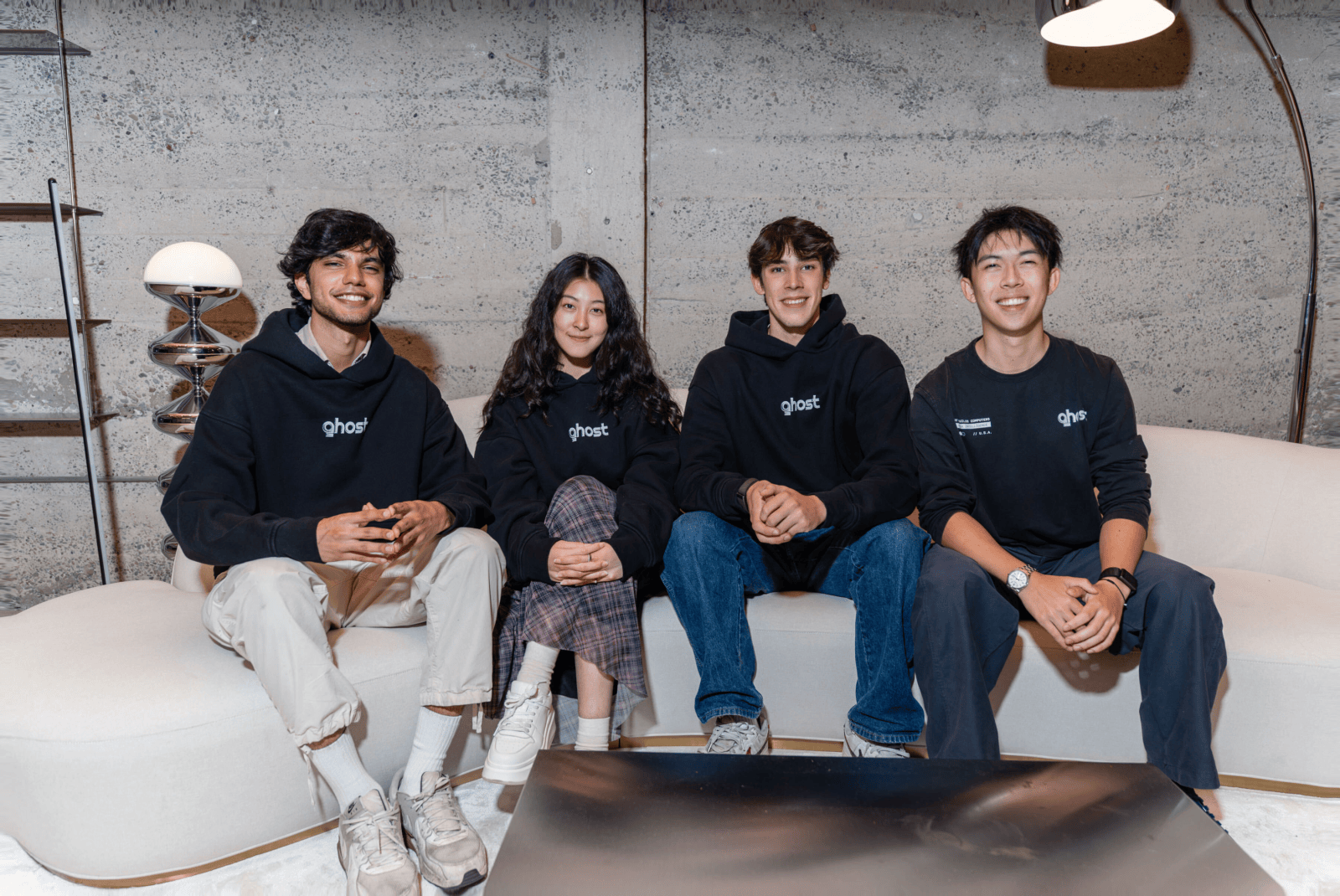
He grew fascinated with personal AI, which prompted him to launch Ghost. The company announced Monday it has come out of stealth mode after a year of development, alongside an $11 million seed funding round led by Andreessen Horowitz. Additional investors include Abstract, Audacious Ventures, SV Angel, and Nova. His co-founding team consists of Nicholas Chua, 19, Yifei Chen, 24, and Gautam Sharda, 23.
Ghost’s inaugural product is Core, a personal computer engineered specifically for AI agents capable of taking actions on a user’s behalf. According to Javaid, the concept centers on consolidating a person’s data — from desktop contents to applications to smart home devices — into a single hardware unit designed to continuously run AI agents that function as assistants, execute tasks, and comprehend a person’s life.
“You can run models on existing hardware, but it’s a terrible experience on many levels,” said Javaid, who also serves as Core’s CEO.
Core features an Nvidia RTX Pro 4000 SFF Blackwell GPU (a chip type commonly used for running AI models), Javaid noted, adding that the GPU comes included in the device’s price, so customers don’t need to purchase one separately. He said it also has its own software layer, browser, and filing system and can continuously process information and tasks without constant prompting.
Core is priced at $3,499. Preorders for the first batch open Monday, with shipping slated for the last week of October.
Javaid described Core as a “brain in a box” without a display, which users access via a phone or app. Voice mode is also available, though users must speak into the Core app rather than the device itself. Core comes with three models preinstalled: Qwen-3.8-Next, Qwen-3.8-27B, and Gemma-4-31B.
Javaid said users can also install other models from Hugging Face, where developers share AI models, or load their own trained models.
Asked how Core differs from a Mac Mini, Apple’s compact desktop computer that some configure to run AI tools, Javaid said Core’s hardware and software were purpose-built for running AI agents, with models already installed, while the Mac Mini is a general-purpose computer that can be adapted for AI.
“As new models or improvements to existing models come out, we can push out over-the-air updates, similar to how Tesla works,” Javaid said of Core, adding that if a new generation of models emerges, the company asks users whether they want to switch. “Users can also turn on auto-updates so they’re always running the latest generation of a given model.”
The team currently assembles the units at its San Francisco facility. Javaid said the goal is to sell a fully functional computer that doesn’t require complex setup or configuration.
He said the models and personal memory run locally, and all personal information is encrypted so that no cloud provider or third party, including Ghost, can meaningfully access it. He also said users can control how much autonomy they grant their Core agents, and the device is programmed to keep working if Ghost shuts down.
“All of the source code, logic, and model weights live on the device, not the services,” he said. “We build this device to not be dependent on having an outside entity maintaining the service.”
He said the team is also building a firewall to restrict how the agent can use its credentials, such as logins and passwords. The firewall “monitors every outgoing network request on the computer and if it sees the agent performing a sanctioned action or exfiltrating data it shouldn’t, it rejects the request and flags it for user review.”
“The user owns all of it,” he said of the device, memory, and data. “Once you buy the hardware, everything is stored, run, and processed on the device.”
He said he isn’t overly concerned about competition, including from established tech companies. “People sometimes give incumbents credit for having already built the product because they have the ingredients,” he said.
He credited Apple with strong hardware and innovation, but said much of what Core aims to address is software: “The model reasons over your life, how it remembers, how it takes action, how it knows when to reach out,” he continued.
Javaid offered an example of how Core is meant to function: “Core proactively sends you a notification that you might be getting sick because it sees your resting heart rate is elevated, sees from computer history that you were up late working on a project, and has seasonal context that it is flu season in San Francisco.”
The company’s primary focus is building a product people love, he said. “If we can’t do that, Apple isn’t the reason we failed,” he said.
Above, Core’s founding team (L-R): Gautam Sharda, 23; Yifei Chen, 24; Zain Javaid, 19; and Nicholas Chua, 19.