
As pledged, President Donald Trump revealed plans for a new Super Intelligence Force, stating it will be overseen by Director of National Intelligence Jay Clayton alongside other top officials from his administration.
“The Super Intelligence Force is responsible for aligning the Federal Government’s initiatives to ensure that America remains at the forefront of Super Intelligence—a breakthrough many experts believe surpasses even the Industrial Revolution and the internet—while safeguarding American interests and enhancing the quality of life for every citizen,” Trump wrote in a Sunday morning post on Truth Social.
In September, amid an AI safety discussion that the president largely dismissed as a manufactured narrative by “Radical Left Democrats,” Trump indicated he would still establish an AI Force and designate an AI coordinator (“Only High I.Q. individuals need apply!”).
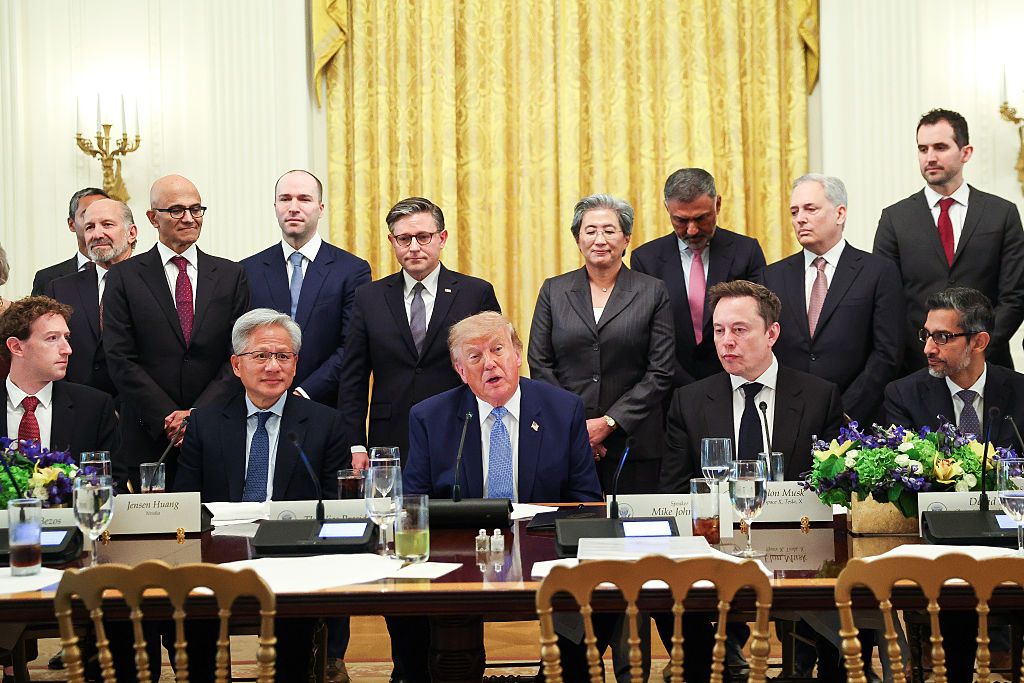
Following through, Trump issued an executive order to rebrand AI as “super intelligence,” a shift that some tech leaders present at this week’s White House gathering appeared to accept—despite minor missteps, such as a notable typo in the safety commitment they signed.
Thus, it follows that Trump’s latest initiative adopts this rebranded terminology.
The Wall Street Journal notes that Clayton will lead the Super Intelligence Force, effectively positioning him as the nation’s primary AI/SI coordinator, supported by Federal Trade Commission Chair Andrew Ferguson, Undersecretary of Defense for Research and Engineering Emil Michael, and Office of Personnel Management Director Scott Kupor.
According to reports, the task force has 120 days to produce an analysis detailing both the dangers and potentials tied to artificial intelligence. Clayton—who previously argued that it would be reckless for the U.S. to retreat from AI development as nations like China push forward—told the WSJ that one of the greatest threats is falling behind, emphasizing that “being first” is critical.
Per its charter, the task force aims to “devise strategies for addressing SI-related risks to society, while avoiding excessive regulation or regulatory capture that might hinder innovation and fair competition.”