
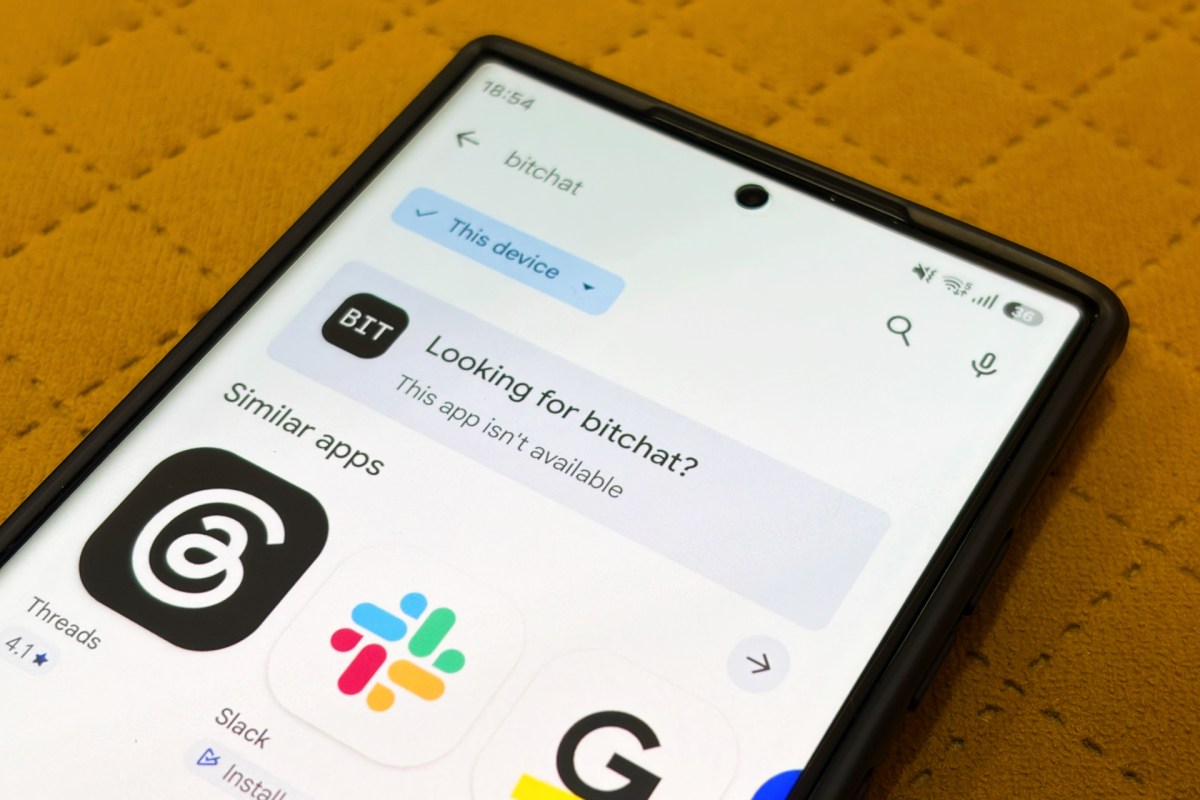
Jack Dorsey’s decentralized messaging app Bitchat, built to function without an internet connection, has been pulled from both Apple’s App Store and Google Play in India, several months after New Delhi first moved to limit access to the open‑source software.
On Saturday, Dorsey said the Indian government had instructed Apple to delete Bitchat from its Indian App Store. He shared an Apple notice on X showing that the Ministry of Electronics and Information Technology issued the request under Section 69A of the Information Technology Act, India’s main law for government‑ordered online blocking.
Apple’s notice stated that Bitchat would stay available in its App Store outside India, but that the app’s TestFlight beta distribution would also be blocked within the country.
When Techdaily checked on Saturday, Bitchat was no longer downloadable from Google Play in India, and its website could not be reached via multiple Indian ISPs. It remained unclear whether Google or the ISPs had also received directives from the federal government.
Apple, Google, and India’s IT ministry did not reply to requests for comment.
Launched last July, Bitchat relies on Bluetooth mesh networking to let nearby devices exchange encrypted messages without needing cellular service, internet access, or centralized servers.
In July 2026, Dorsey disclosed that Indian authorities had ordered GitHub to remove repositories linked to the open‑source messaging app, prompting digital‑rights advocates and legal experts to question the legal justification for restricting software based on its functionality.
The government’s GitHub order argued that Bitchat’s design makes it difficult for law‑enforcement to intercept communications or trace users, and highlighted its ability to keep working during internet shutdowns. That order was based on a provision of India’s IT law concerning intermediaries’ liability for third‑party content, which is distinct from the Section 69A citation in Apple’s notice.
The New Delhi‑based Internet Freedom Foundation labeled the latest order unconstitutional, contending that Section 69A permits blocking of unlawful information but not a messaging app merely because it can operate during shutdowns. The group also noted that neither the blocking order nor the purported illegal content cited as justification had been made public.
The fresh restrictions on Bitchat coincide with a new wave of youth‑led protests in India over revisions to the voter rolls. Police detained several demonstrators in New Delhi on Saturday as they called for the resignation of the chief election commissioner, alleging manipulation of the electoral rolls. Authorities suspended internet service around New Delhi’s Jantar Mantar for 12 hours on Friday amid the protests.
During the July protests, participants reportedly turned to Bitchat and the rival app Briar after authorities cut internet access.
Interest in Bitchat spiked in India at the same time. According to Sensor Tower, the country accounted for roughly 85 percent of the app’s global downloads between July 17 and July 23, up from about 1 percent in the preceding 30 days.