
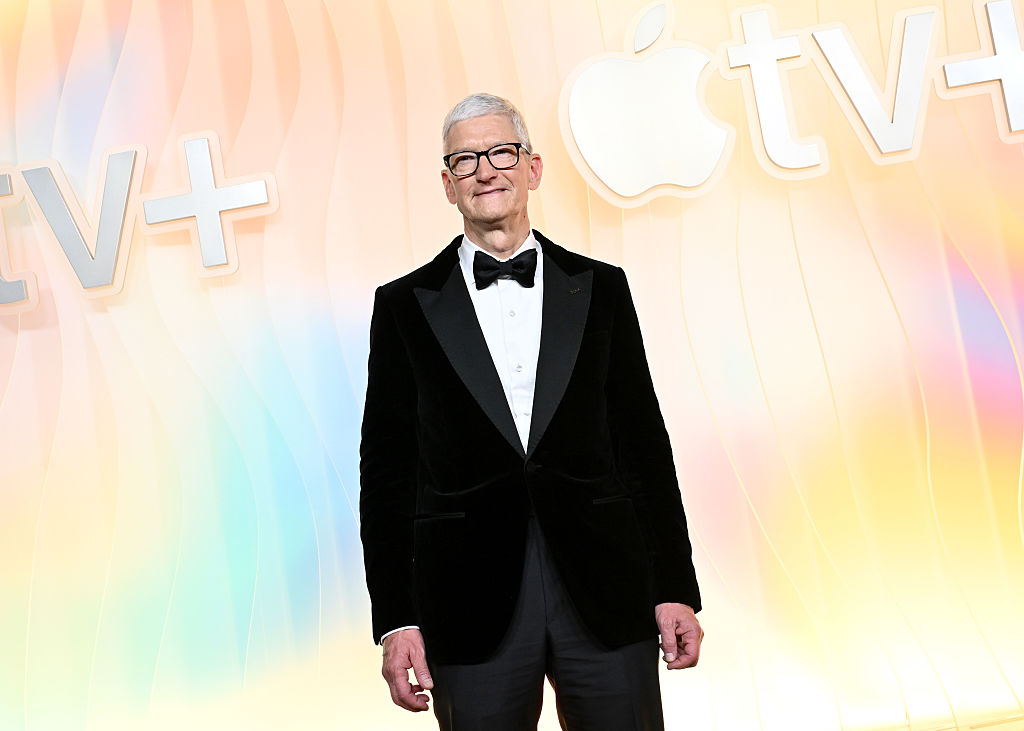
Apple announced on Monday afternoon that Tim Cook will relinquish his role as CEO, a position he has occupied since 2011 upon the passing of Steve Jobs. John Ternus, the Senior Vice President of Hardware Engineering, is set to assume the CEO role on September 1 of this year.
Cook will continue his association with the company in the capacity of executive chairman, while Ternus will be appointed to Apple’s board of directors. Arthur Levinson, who has held the position of non-executive chairman for the past 15 years, will transition to lead independent director, also effective September 1.
This leadership change has been anticipated for a while and concludes one of the most significant and lengthy tenures a CEO has maintained at any organization. Cook assumed control during a period of significant uncertainty — Jobs passed away from pancreatic cancer merely six weeks after officially transferring the role — and took over a company that many observers found difficult to distinguish from its legendary founder. The company he leaves behind boasts a valuation of $4 trillion, with annual revenue having more than quadrupled during his leadership.
“It has been the greatest privilege of my life to be the CEO of Apple,” Cook stated in a Monday announcement. “I love Apple with all of my being, and I am so grateful to have had the opportunity to work with a team of such ingenious, innovative, creative, and deeply caring people who have been unwavering in their dedication to enriching the lives of our customers.”
When Cook joined Apple in Cupertino in 1998, his role was not to serve as a visionary. Instead, Jobs, who had recently returned to the company after a long absence, required someone to rectify a supply chain that was, by most accounts, a disaster. Cook, a native of Mobile, Alabama, who spent 12 years at IBM before working at Intelligent Electronics and Compaq, delivered exactly what was needed and more. He rapidly closed warehouses and consolidated suppliers, and he has been widely credited with transforming Apple’s manufacturing operation into a competitive advantage over time rather than a liability.
His ascent to CEO was never guaranteed.
For years, the prevailing belief within and around Silicon Valley was that no one could succeed Jobs. It was difficult to envision someone less like the flamboyant product visionary than Cook, a methodical supply-chain and operations expert. However, as Jobs’ health compelled him to step back on multiple occasions — in 2004, 2009, and again in 2011 — Cook managed the company smoothly enough that by the time Jobs formally transferred the title, he was the clear choice.
Meet your next investor or portfolio startup at Disrupt
Your next round. Your next hire. Your next breakout opportunity. Find it at Techdaily Disrupt 2026, where 10,000+ founders, investors, and tech leaders gather for three days of 250+ tactical sessions, powerful introductions, and market-defining innovation. Register now to save up to $410.
Meet your next investor or portfolio startup at Disrupt
Your next round. Your next hire. Your next breakout opportunity. Find it at Techdaily Disrupt 2026, where 10,000+ founders, investors, and tech leaders gather for three days of 250+ tactical sessions, powerful introductions, and market-defining innovation. Register now to save up to $410.
There were, notably, some missteps that followed. The most prominent was the Apple Vision Pro, the mixed-reality headset that Cook championed as the company’s next major platform and that was largely overlooked by consumers reluctant to pay thousands of dollars to wear a device weighing over a pound on their face.
His tenure has been highly successful by other metrics, however. As the company highlighted in its own communication regarding the executive changes on Monday, Cook transformed Apple Services into a business generating over $100 billion annually. Apple also credits him with fostering the thriving wearables category. (Last year, the Apple Watch accounted for roughly 25% of global smartwatch sales.)
Levinson, in a statement on behalf of the board, described Cook’s leadership as “unprecedented and outstanding,” noting that Cook’s “integrity and values are infused into everything Apple does.” Levinson added that the board is “thrilled” Cook will continue as executive chairman.
Unsurprisingly, Ternus has been involved in much of what Apple has shipped over the past decade. According to Apple, he was a key contributor to the introduction of iPad and AirPods and has overseen numerous generations of the iPhone, Mac, and Apple Watch. His team’s work was made even more visible this past fall, with the introduction of a new iPhone lineup that included the iPhone 17 Pro and Pro Max, the iPhone Air, and the iPhone 17 itself.
On the Mac side, Ternus has helped strengthen the category, including via the recent introduction of the more affordable MacBook Neo. His team is also credited (by Apple) with pushing AirPods to the point where they now function not only as headphones but also as an over-the-counter hearing health system.
Beyond the products themselves, Ternus has made durability and repairability a major focal point. Apple credits him with introducing new materials and manufacturing techniques that have reduced the carbon footprint of Apple’s products, including a new recycled aluminum compound used across multiple product lines, while also extending the lifespans of several Apple devices through advances in their fixability.
In his own statement on Monday, Ternus said: “Having spent almost my entire career at Apple, I have been lucky to have worked under Steve Jobs and to have had Tim Cook as my mentor,” he said. “I am humbled to step into this role, and I promise to lead with the values and vision that have come to define this special place for half a century.”
Said Cook of Ternus in turn: “John Ternus has the mind of an engineer, the soul of an innovator, and the heart to lead with integrity and with honor,” he said. “He is without question the right person to lead Apple into the future.”
Topics