
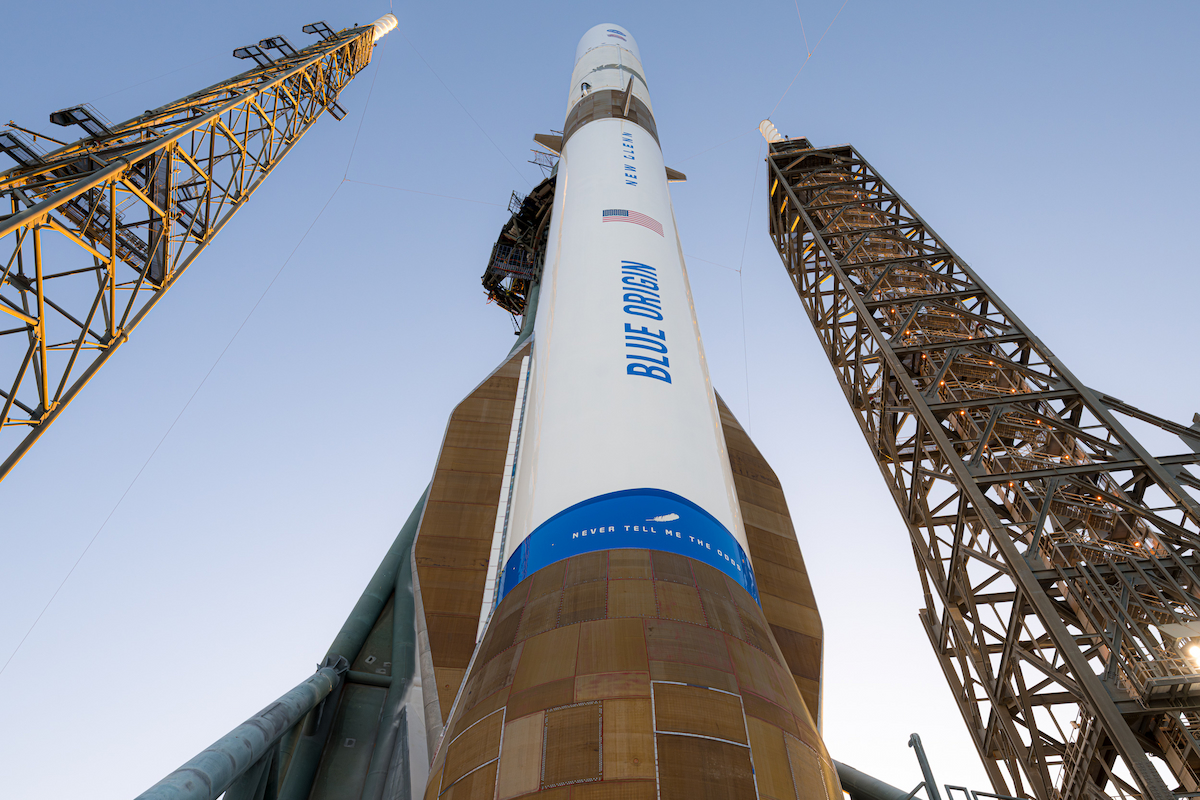
Jeff Bezos’ aerospace firm Blue Origin achieved a milestone by reusing a New Glenn booster for the first time on Sunday, yet the mission fell short of its main objective: placing a communications satellite for client AST SpaceMobile into the intended orbital path.
AST SpaceMobile reported Sunday afternoon that the New Glenn’s upper stage deposited the BlueBird 7 satellite into an orbit “lower than intended.” While the satellite detached successfully and activated its systems, the altitude proved insufficient “to maintain operations,” forcing the decision to de-orbit the satellite to burn up in Earth’s atmosphere.
AST SpaceMobile confirmed that its insurance policy covers the financial loss of the satellite, and additional BlueBird satellites are expected to be ready within a month. The company holds contracts with multiple partners and anticipates launching 45 more satellites into space by the end of 2026.
This incident marks the first significant setback for Blue Origin’s New Glenn program, which debuted in January 2025 after over ten years of development. It was the second customer mission for New Glenn, following a November launch carrying twin spacecraft for NASA destined for Mars. Blue Origin has not yet responded to requests for comment.
The potential failure of New Glenn’s second stage may impact Blue Origin’s broader commercial goals, including its bid to become a primary launch provider for NASA’s Artemis lunar missions. Both NASA and the Trump administration have urged Blue Origin and SpaceX to deliver lunar landers before the end of President Trump’s second term, paving the way for human lunar return.
Blue Origin CEO Dave Limp has previously stated that his company is committed to helping NASA return to the moon as quickly as possible.
Blue Origin recently finished testing its initial lunar lander prototype, which the company may launch later this year (uncrewed). Last year, Blue Origin considered using New Glenn’s third flight for this lander but ultimately chose to launch the AST SpaceMobile satellite instead.
Meet your next investor or portfolio startup at Disrupt
Your next round. Your next hire. Your next breakout opportunity. Find it at TechCrunch Disrupt 2026, where 10,000+ founders, investors, and tech leaders gather for three days of 250+ tactical sessions, powerful introductions, and market-defining innovation. Register now to save up to $10.
Meet your next investor or portfolio startup at Disrupt
Your next round. Your next hire. Your next breakout opportunity. Find it at TechCrunch Disrupt 2026, where 10,000+ founders, investors, and tech leaders gather for three days of 250+ tactical sessions, powerful introductions, and market-defining innovation. Register now to save up to $10.
The third New Glenn launch began promisingly on Sunday, with the heavy-lift rocket lifting off at 7:35 a.m. local time from Cape Canaveral, Florida. This marked the first reuse of a previously-flown New Glenn booster, specifically the one used in the rocket’s second mission. Approximately 10 minutes after liftoff, the booster returned and landed on an ocean drone ship, mirroring its November flight. Jeff Bezos shared drone footage of the landing on X, the platform owned by his competitor Elon Musk. (Musk offered congratulations.)
About two hours post-launch, Blue Origin announced via its own post that the New Glenn upper stage had placed the AST SpaceMobile satellite into an “off-nominal orbit.” No further details have been provided since that update.
Blue Origin invested significant time in developing New Glenn, and its decision to carry commercial payloads during early missions was seen as a vote of confidence in the program. In contrast, SpaceX has spent recent years testing its massive Starship with dummy payloads while refining the rocket’s systems.
SpaceX has also experienced payload losses in its Falcon 9 program. In 2015, during the 19th Falcon 9 mission, the rocket exploded mid-flight, destroying a cargo spacecraft bound for the International Space Station. In 2016, a Falcon 9 detonated on the launchpad during testing, resulting in the loss of a Meta internet satellite.
Topics